Behavioural Security Metrics That Change Behaviour
Explore behavioural security metrics that change behaviour in engineering teams, focusing on phishing metrics, security culture, and outcome metrics to drive real change.
Most engineering teams treat security metrics as compliance checkboxes. They track the number of security training modules completed, the percentage of servers patched, or the volume of vulnerability scans run. These are activity metrics, not behavioral ones. They tell you what people did, not whether their behavior has changed in a way that reduces risk.
The core failure is temporal. Security incidents are rare events. If you rely on lagging indicators like "number of breaches," the feedback loop is too slow to influence daily engineering decisions. Human behavior changes through immediate feedback loops, not retrospective audits. This is rooted in operant conditioning: behaviors followed by immediate consequences are more likely to be repeated.
Consider an engineer who ignores a security warning in a CI/CD pipeline because it slows down deployment. If the only feedback comes weeks later during a security audit, the connection between the action (ignoring the warning) and the consequence (audit finding) is weak. The engineer’s primary incentive—shipping code fast—remains unchallenged. To change behavior, metrics must provide immediate, contextual feedback that aligns security actions with engineering goals.
Phishing Metrics That Actually Work
Phishing remains one of the most effective attack vectors because it exploits human psychology, not software vulnerabilities. Traditional phishing metrics focus on "click rates"—the percentage of users who click on a simulated phishing link. This metric is flawed because it frames security as a test users can fail, creating a culture of blame and fear. When engineers feel monitored rather than supported, they hide mistakes rather than learn from them. A shift in security culture is essential to move away from punitive measures toward educational engagement.
A more effective behavioral metric is the Report Rate. This measures the percentage of employees who actively report simulated phishing emails as suspicious, regardless of whether they clicked.
Why does this work? Reporting a phishing email triggers a positive reinforcement loop. The engineer receives immediate acknowledgment (e.g., a "Good job!" message) and often brief, contextual education. This transforms the interaction from a punitive test into a learning opportunity. Over time, the engineer associates vigilance with positive outcomes, not punishment.

According to SANS Institute research, organizations that track report rates see higher engagement and lower click rates over time because the behavior of reporting becomes normalized within the team.
To implement this, security teams should:
- Track report rate alongside click rate: A high report rate with a low click rate indicates a vigilant, responsive team.
- Provide immediate feedback: Use automated tools to send a brief, non-punitive message when an email is reported.
- Avoid individual shaming: Report rates should be tracked at the team or organizational level, not for individuals, to maintain psychological safety.
Outcome-Based Culture Metrics
While phishing metrics address external threats, internal security culture is driven by how engineers handle internal security processes. Two outcome-based metrics are particularly effective: Security Debt and Mean Time to Remediate (MTTR) for vulnerabilities.
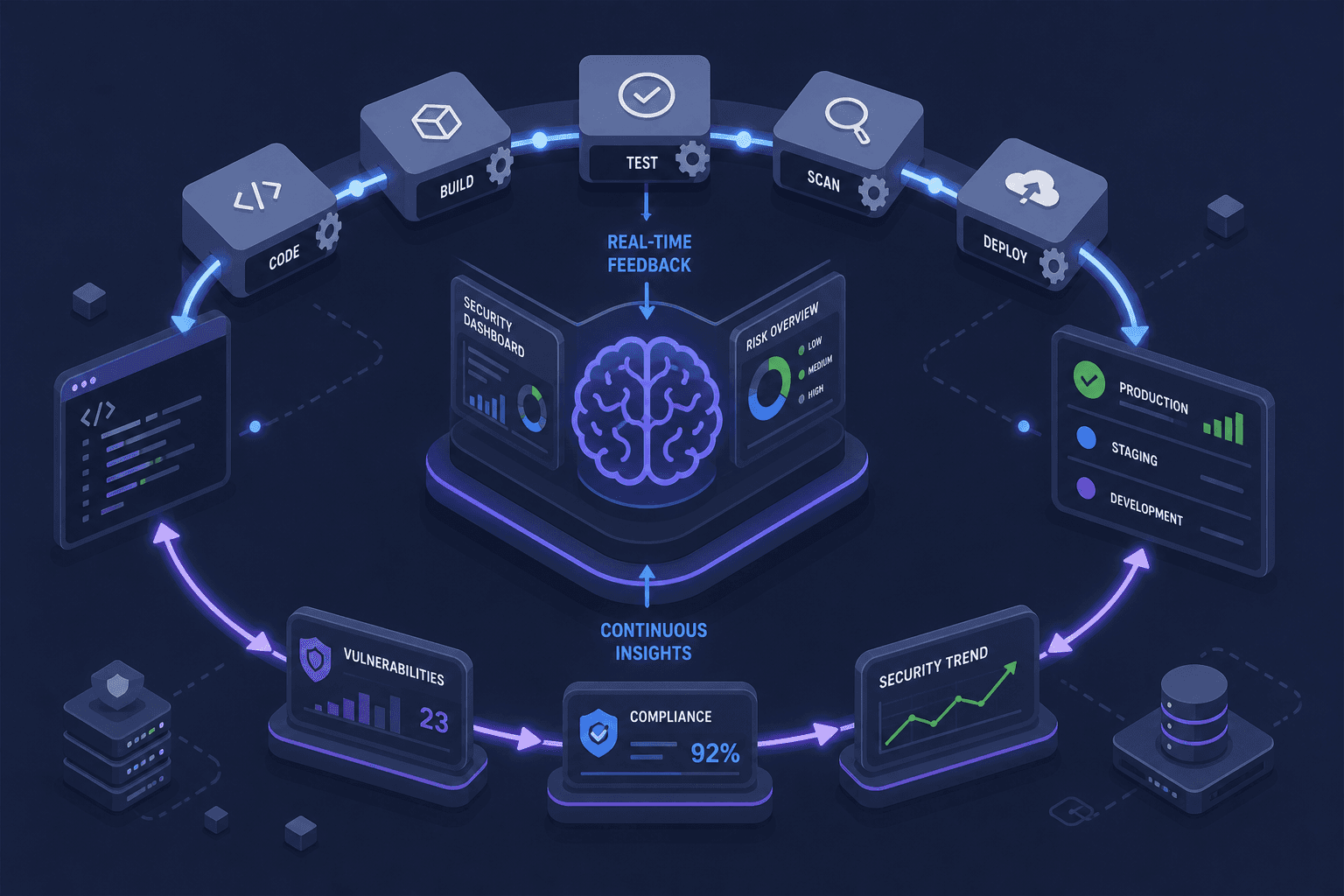
Security Debt is the accumulation of unresolved security issues that increase risk over time. Unlike technical debt, which can be quantified in code complexity, security debt is often qualitative. However, by tracking the number of open, high-severity vulnerabilities in production, teams can make this visible. The mechanism here is visibility-driven accountability. When security debt is visible on dashboards alongside feature development metrics, engineers begin to view remediation as part of the delivery process, not a separate, bureaucratic task.
MTTR for Vulnerabilities measures the time from detection to resolution. This metric aligns engineering incentives with security outcomes. If an engineer knows that their team’s performance is measured by how quickly they resolve vulnerabilities, they are more likely to prioritize security fixes during sprint planning. This shifts security from a gatekeeping function to a shared responsibility.

OWASP emphasizes that secure development is an ongoing process, not a phase. By tracking MTTR, teams can identify bottlenecks in their secure development lifecycle. For example, if MTTR is high, it may indicate that security tools are integrated too late in the pipeline, forcing engineers to stop and fix issues manually. The solution is not to punish engineers but to improve tooling and processes.
Implementation Strategy
Rolling out behavioral security metrics requires careful change management. The goal is to create a "blame-free" culture where metrics are used for improvement, not punishment. This approach is central to modern security engineering practices.
- Start with team-level metrics: Avoid tracking individual performance. This prevents gaming of the system and encourages collaboration. Engineers are more likely to help each other report phishing or fix vulnerabilities if the metric is shared.
- Contextualize the data: Provide explanations for why metrics matter. For example, explain how a high report rate correlates with lower incident rates. This helps engineers understand the mechanism behind the metric.
- Iterate based on feedback: Regularly survey engineers about the metrics. If a metric is perceived as unfair or irrelevant, adjust it. Behavioral change is a gradual process that requires trust.
Psychological safety is the foundation of this approach. Research shows that teams with high psychological safety are more likely to report errors and seek help, which is critical for security. By focusing on outcome-based metrics and positive reinforcement, security teams can foster a culture where security is seen as an enabler of engineering excellence, not a barrier.
Conclusion
Changing behavior requires more than policy; it requires designing feedback loops that make security actions rewarding and visible. By shifting from activity metrics to outcome metrics, security leaders can transform their teams from passive recipients of security rules into active participants in risk reduction.
To sustain this transformation, leadership must consistently reinforce the value of a positive security culture. When engineers see that their efforts in identifying and resolving issues are recognized and valued, the entire organization benefits from improved resilience and reduced risk exposure.
Related posts
The LLM Threat Model: Trust Boundaries & AppSec Strategies
A technical examination of the LLM threat model, covering trust boundaries, attack surfaces, and appsec strategies for security engineers and developers.
Non-Human Identity Governance for Agents
A guide to managing non-human identity governance, agent identity lifecycle, and scoped credentials for security and platform engineers.
Device Certificates vs Passwords: The Shift to Hardware-Backed Machine Identity
Examines device certificates versus passwords for secure enrollment and hardware-backed identity management in modern infrastructure.
